Reading guide
Content guideOverview
This is Part 1 of a Zi Wei Dou Shu lecture handout from the Wenmo Tianji online classroom, presented by Yiting. It introduces the multi-role interaction theory: fate is not read from a single angle but as a chemical effect between the individual and society, so the people around us matter. The handout shows how to assess interpersonal chemistry through the chart and assigns family roles to the twelve palaces, such as the Life Palace for self and grandmother, and the Parents Palace for father and eldest sister. It then discusses work relationships, emphasizing the opposite palace as the main interaction target: business owners read the Wealth Palace opposite the Fortune Palace as customers, employees read the Career Palace opposite the Spouse Palace as service targets, superiors fall in the Servants Palace, and partners in the Children Palace. A flexible career-palace framework maps all twelve palaces onto business aspects, such as the Parents Palace for checks and documents and the Property Palace for peers, colleagues, and clients. The final page lists seven review questions on in-laws, mentors, social circles, the sibling-friend line, business interpersonal relations, the Property Palace, and a spouse's money and work. The style is conversational slide-based teaching, suited to learners with basic Zi Wei knowledge.
Contents
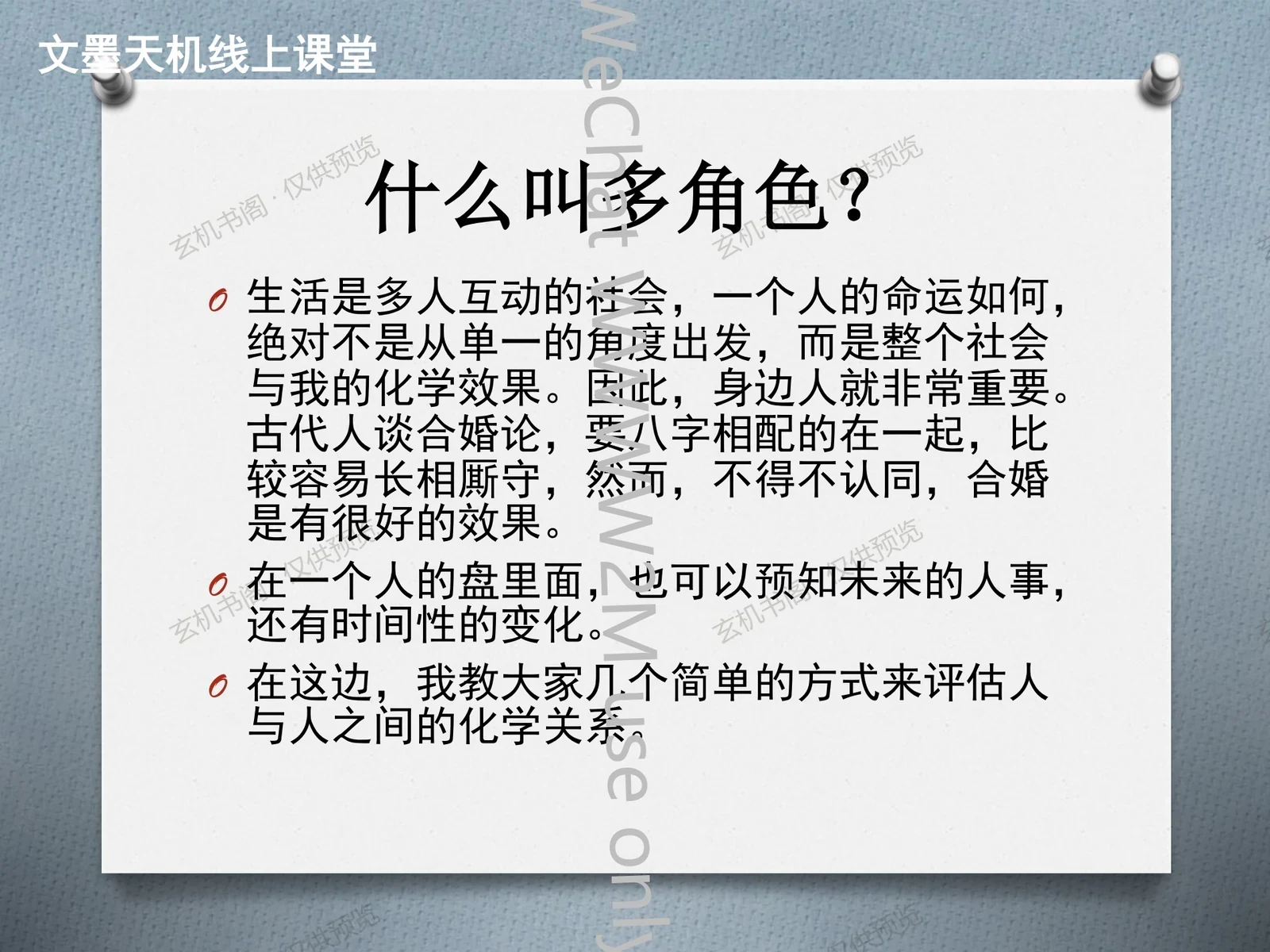
What multi-role means: life as a multi-person society
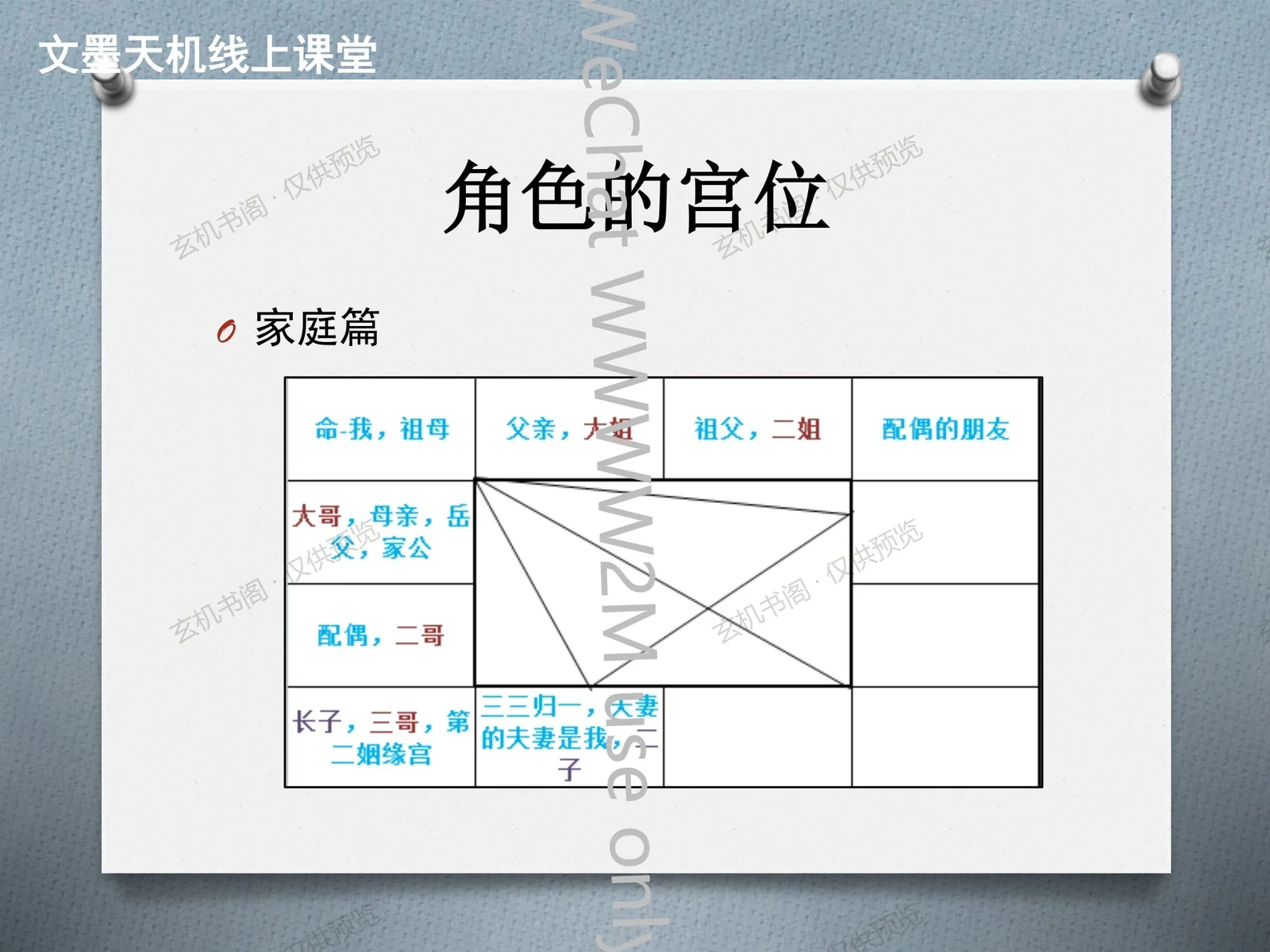
Role palaces (family section): twelve-palace role table
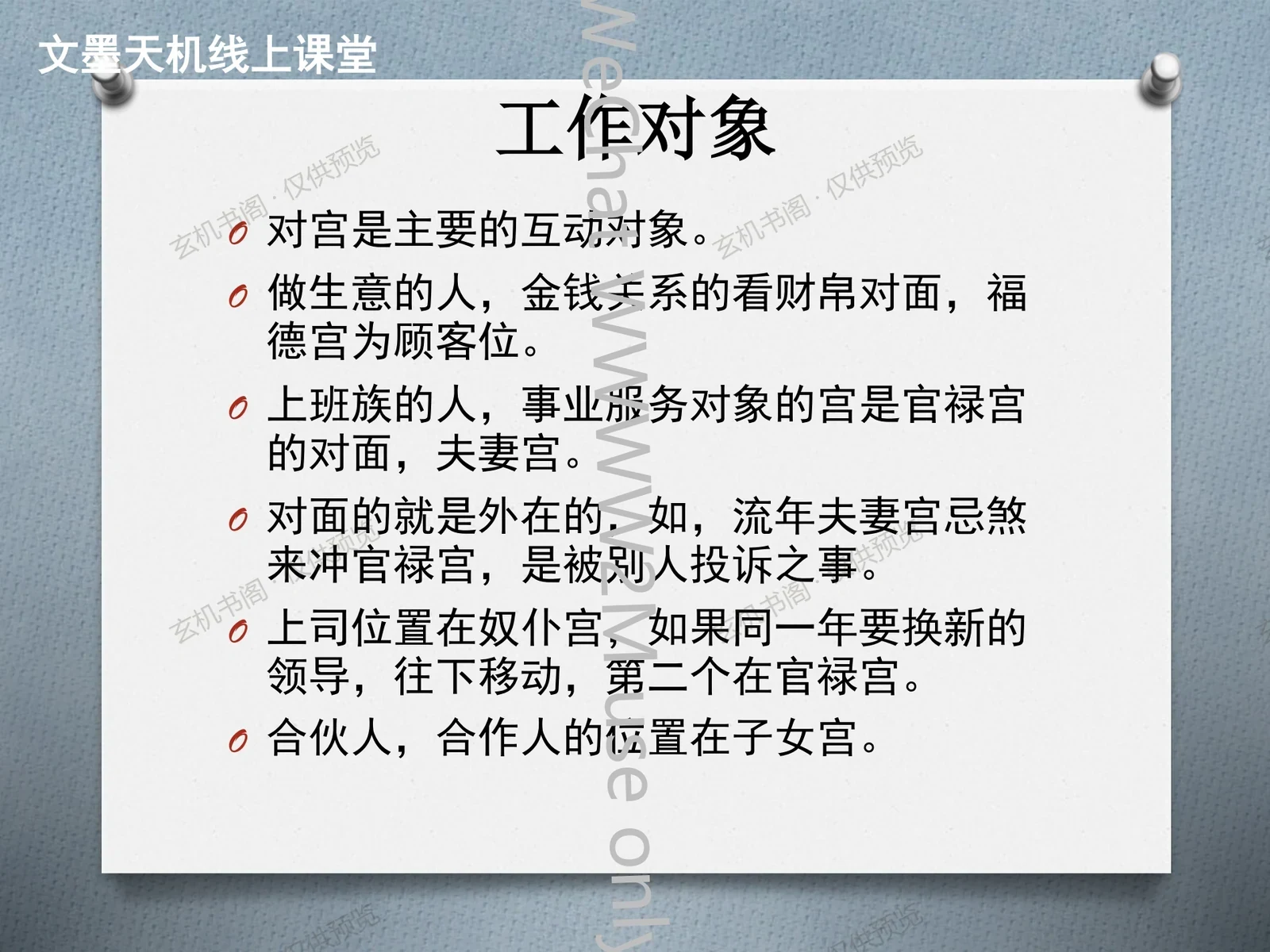
Work targets: opposite palace, customer position, service targets
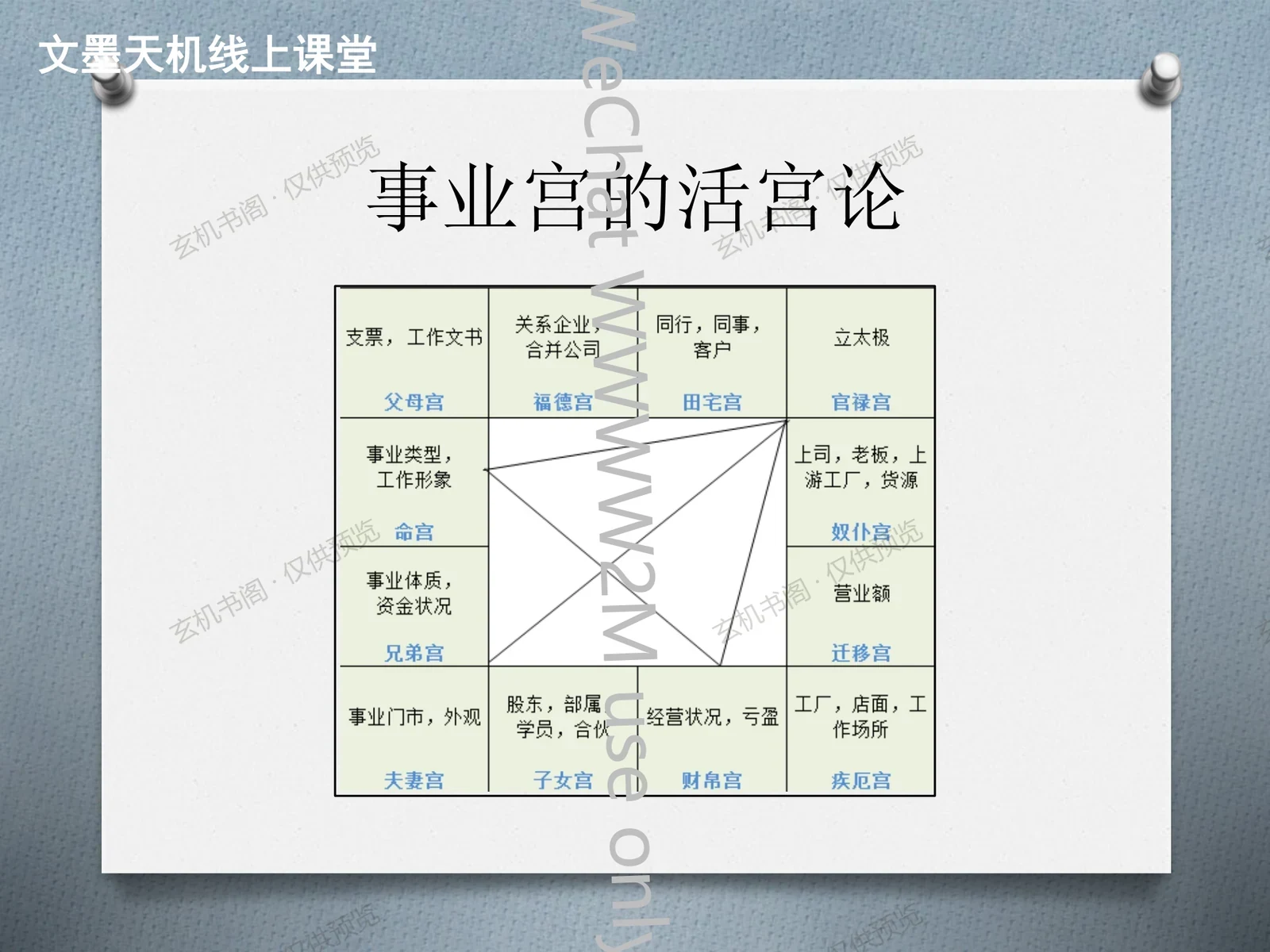
Flexible career palace: twelve palaces mapped to business aspects
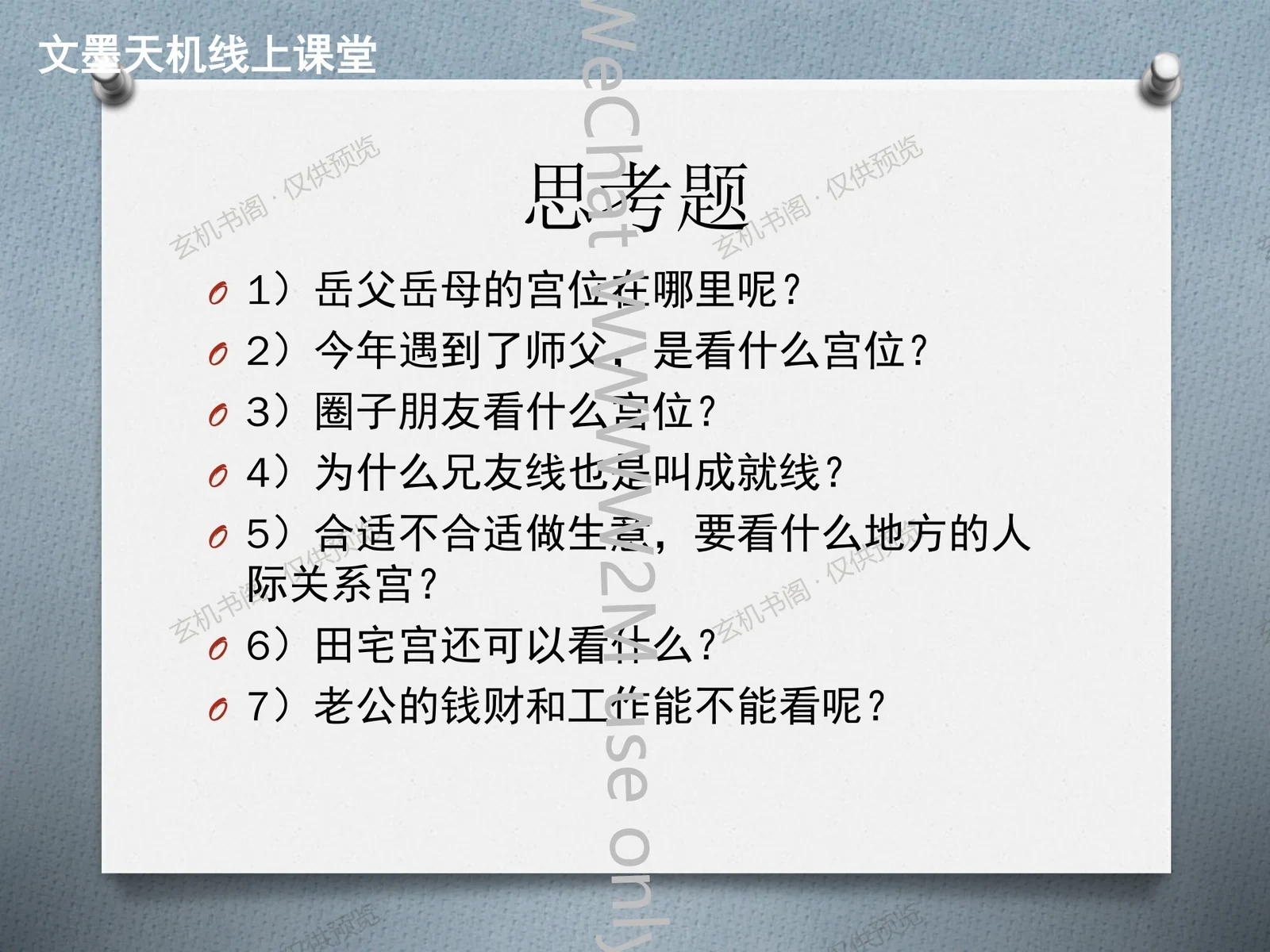
Review questions: in-laws, mentor, social circle, and more
Key Points
Fate is a chemical effect between society and self, so those around us matter.
The family section assigns relatives and roles to the twelve palaces; the Life Palace stands for self and grandmother.
Work interaction centers on the opposite palace; business owners read customers via the Wealth Palace's opposite Fortune Palace.
Employees read service targets via the Career Palace's opposite Spouse Palace; superiors sit in the Servants Palace and partners in the Children Palace.
The flexible career palace turns the twelve palaces into business aspects, e.g. Parents Palace for documents, Property Palace for peers and clients.
Seven closing questions train readers to match relatives and business roles to palaces.