Reading guide
Content guideOverview
This lecture handout centers on pattern (geju) analysis in the San He school of Zi Wei Dou Shu. It defines patterns as structural studies combining the twelve palaces' five elements, star interactions, and timing. Using the Sun and Moon as examples, it explains how day and night determine a star's strength (temples, prosperity, fall, etc.), introduces a clock concept that divides the chart into daytime and nighttime halves, and lists the names and meanings of the Sun in each of the twelve earthly branches. The material is reinterpreted with modern explanations and suits readers with basic Zi Wei Dou Shu knowledge who want to deepen their understanding of pattern judgment and the Sun-Moon stars.
Contents
What is a pattern: San He structure and three components
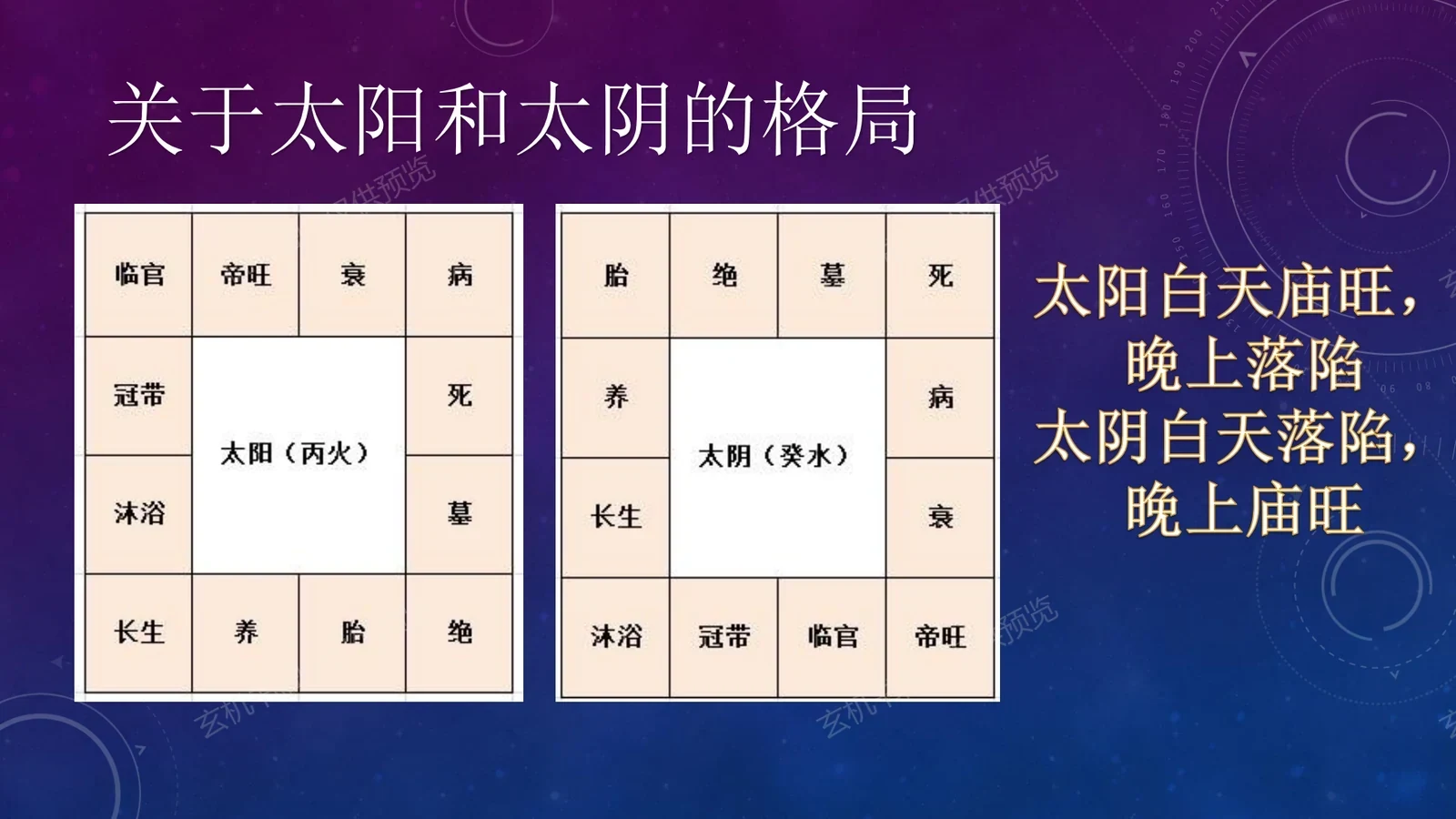
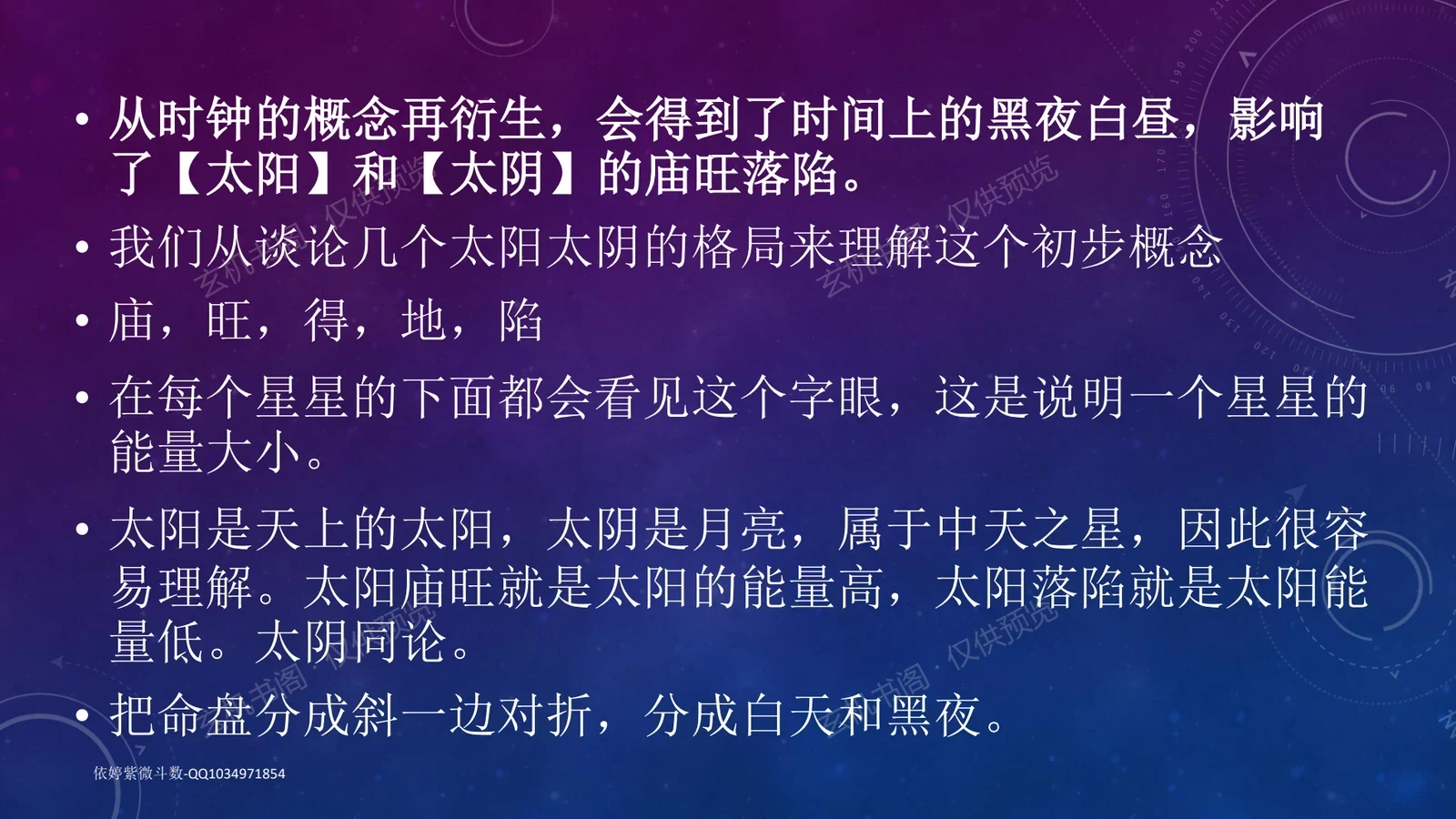
Why the Sun and Moon are strong or weak
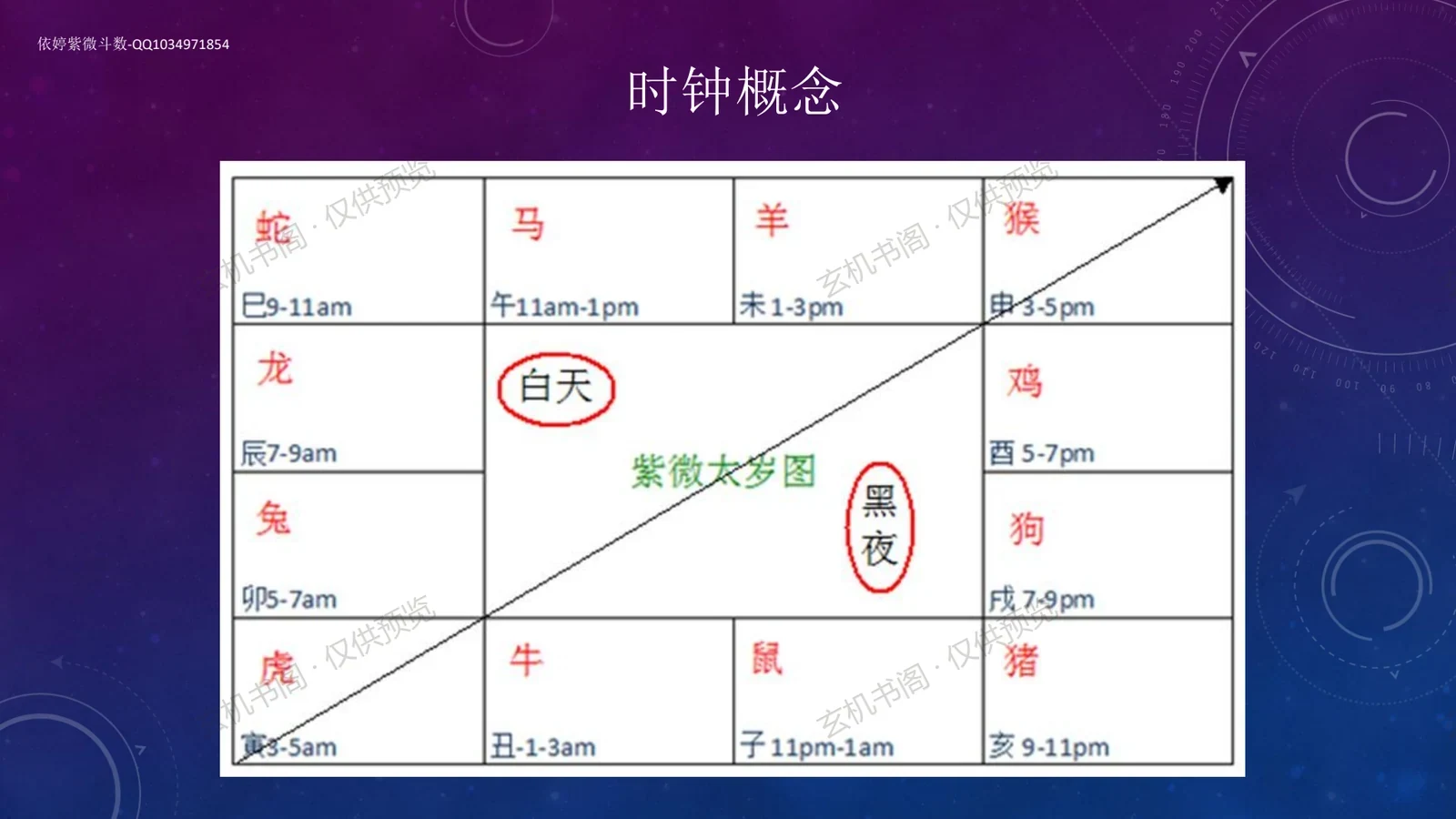
Clock concept and division of day and night
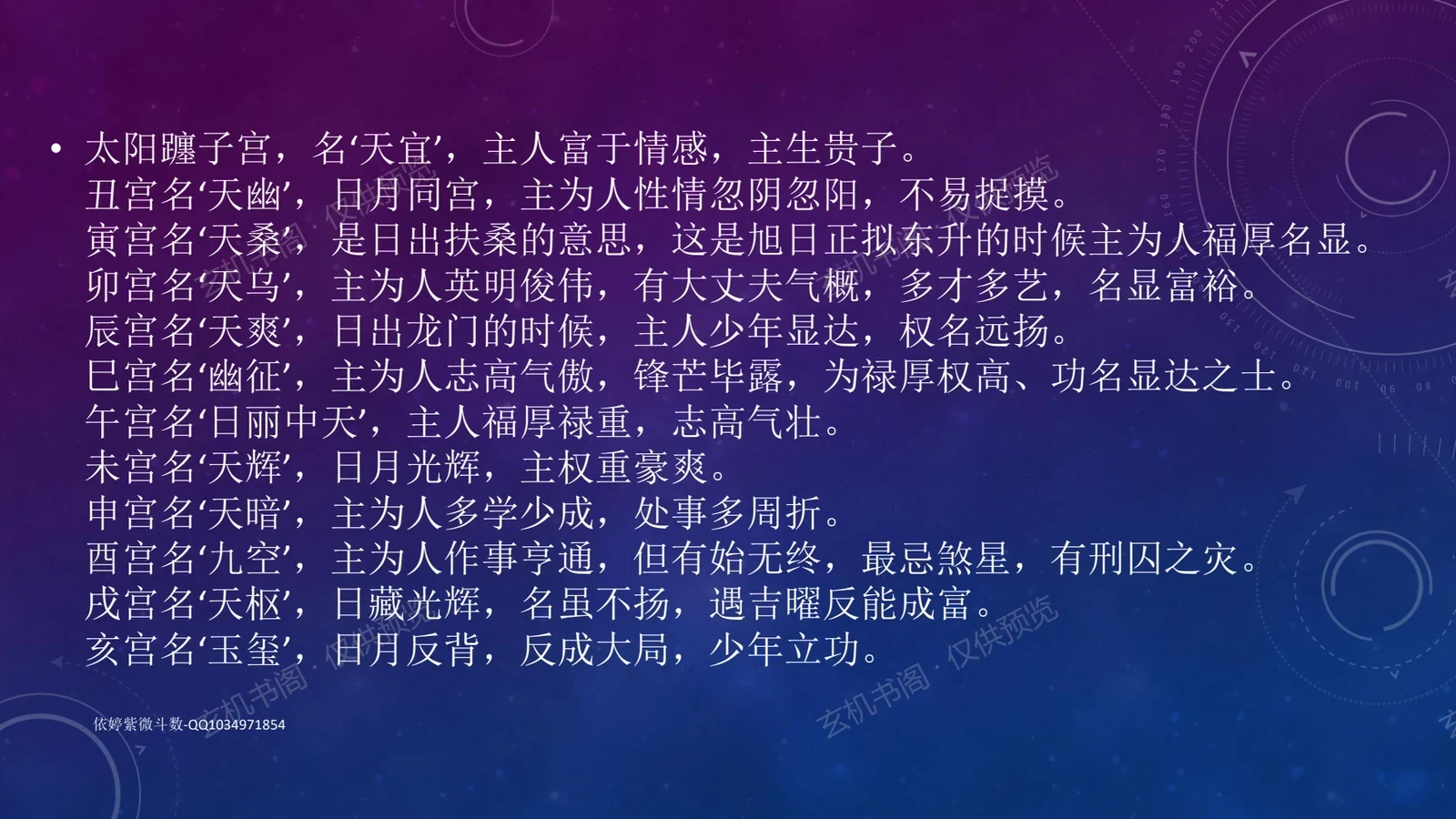
Names and meanings of the Sun in twelve palaces
Effects of each palace on character and fortune
Key Points
Patterns are the core structural study of the San He school, involving palace, star nature, and timing.
The Sun is strong by day and weak at night; the Moon is weak by day and strong at night.
The chart can be folded diagonally into day and night zones, affecting star energy.
Temples, prosperity, gain, ground, and fall indicate star energy levels and are basic to pattern judgment.