Reading guide
Content guideOverview
This is a handout for a Zi Wei Dou Shu course, focusing on the attributes of stars in the Tianfu series and their chemical interactions. It begins with basic theories of star interactions, including the shifting of stars and transient palaces, comparisons between stars and related palaces, and changes among stars. Through examples such as the Sun in the Life Palace and Tian Tong in the Spouse Palace, it explains how to infer fortunes by comparing multiple palaces. The handout also covers the Gong Qi transition method, star transition methods, and in-depth analysis of specific stars like Tai Yin, Tian Fu, Tan Lang, Ju Men, Tian Xiang, Tian Liang, Qi Sha, and Po Jun. Additionally, it discusses how brightness or dimness affects star power and the different outcomes when auspicious and malefic stars combine. Finally, it introduces the transition method originating from Wang Tingzhi's Zhongzhou school, used to compare the Five Elements interactions between natal and transient charts.
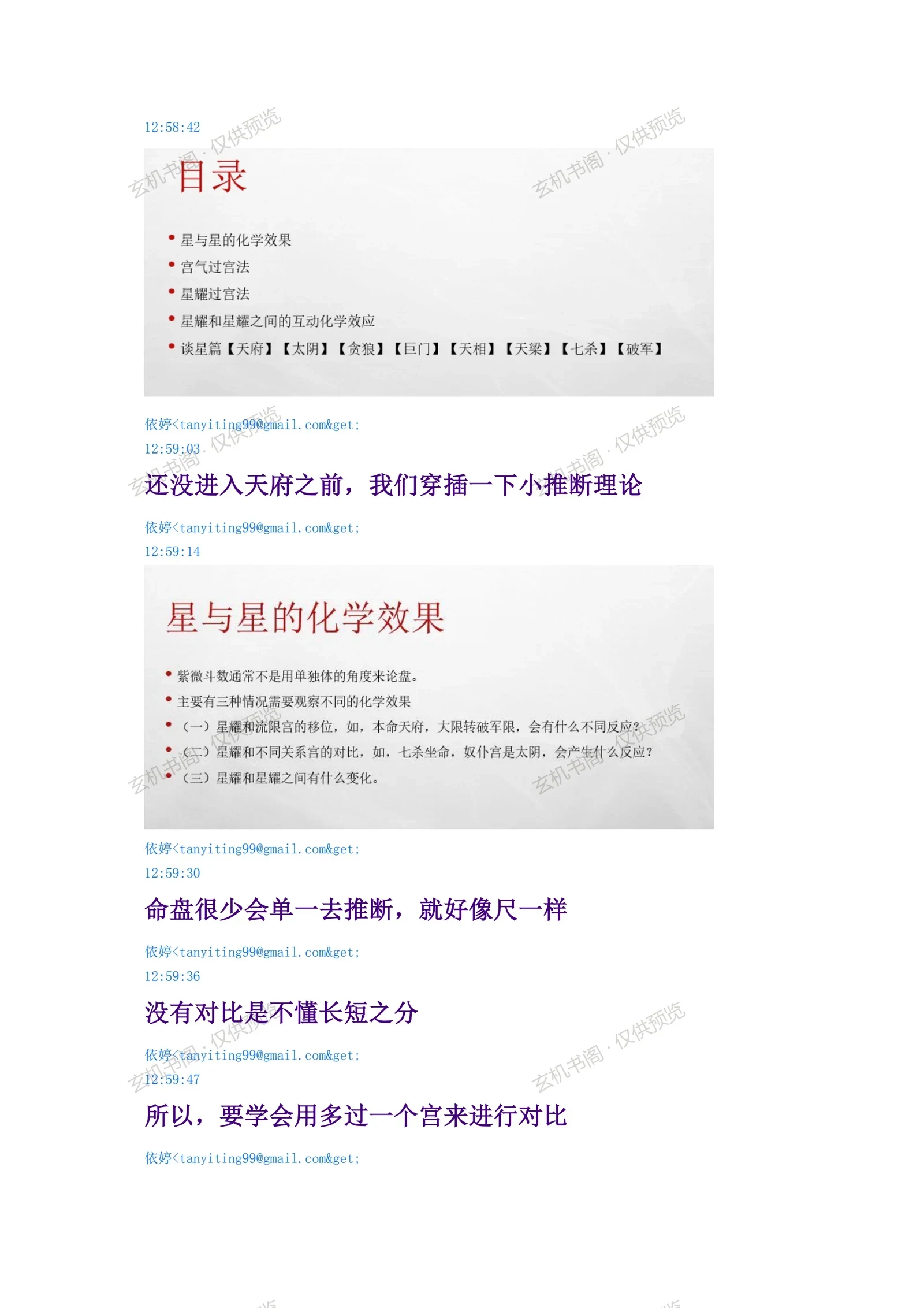
Contents
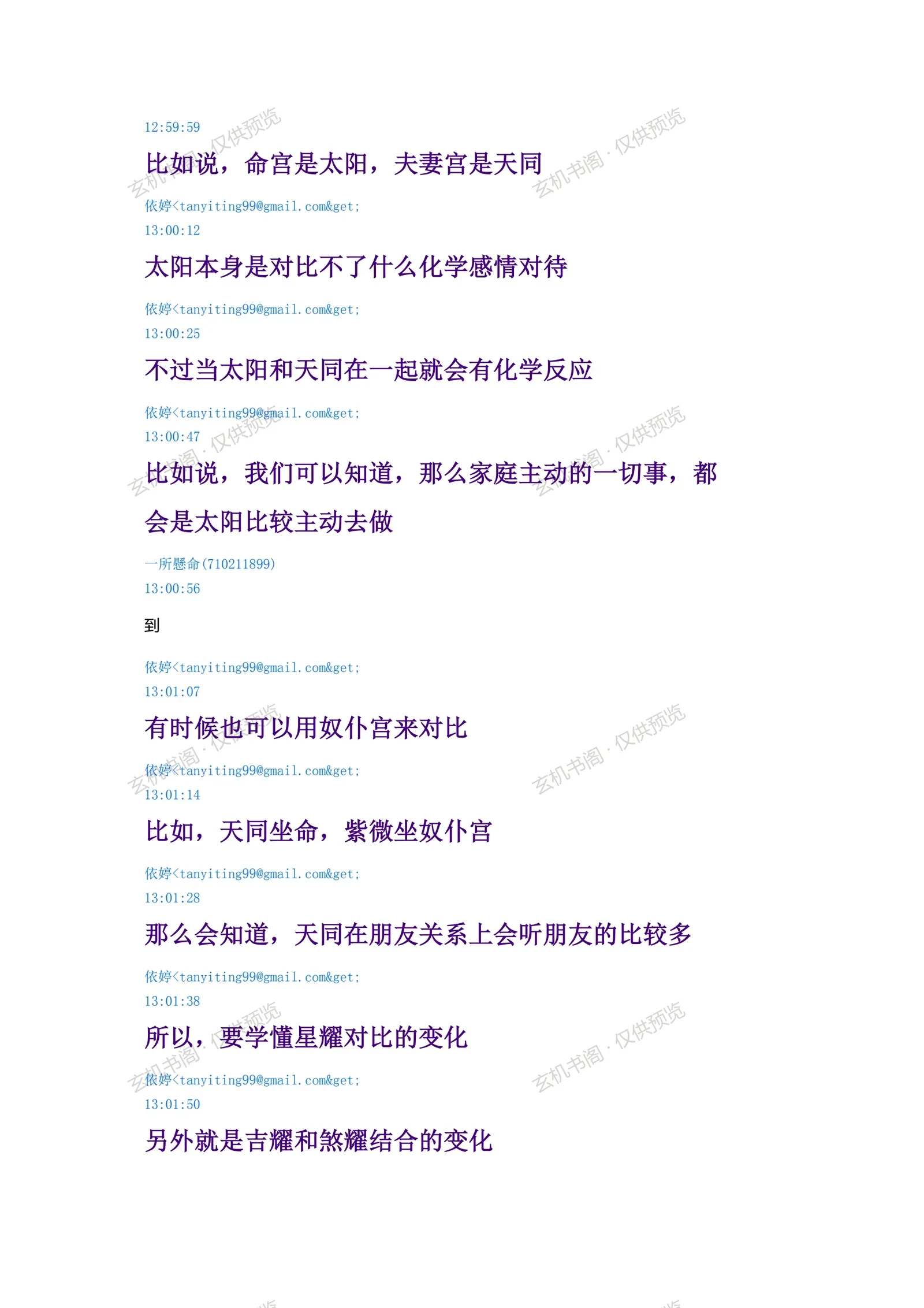
Chemical effects between stars
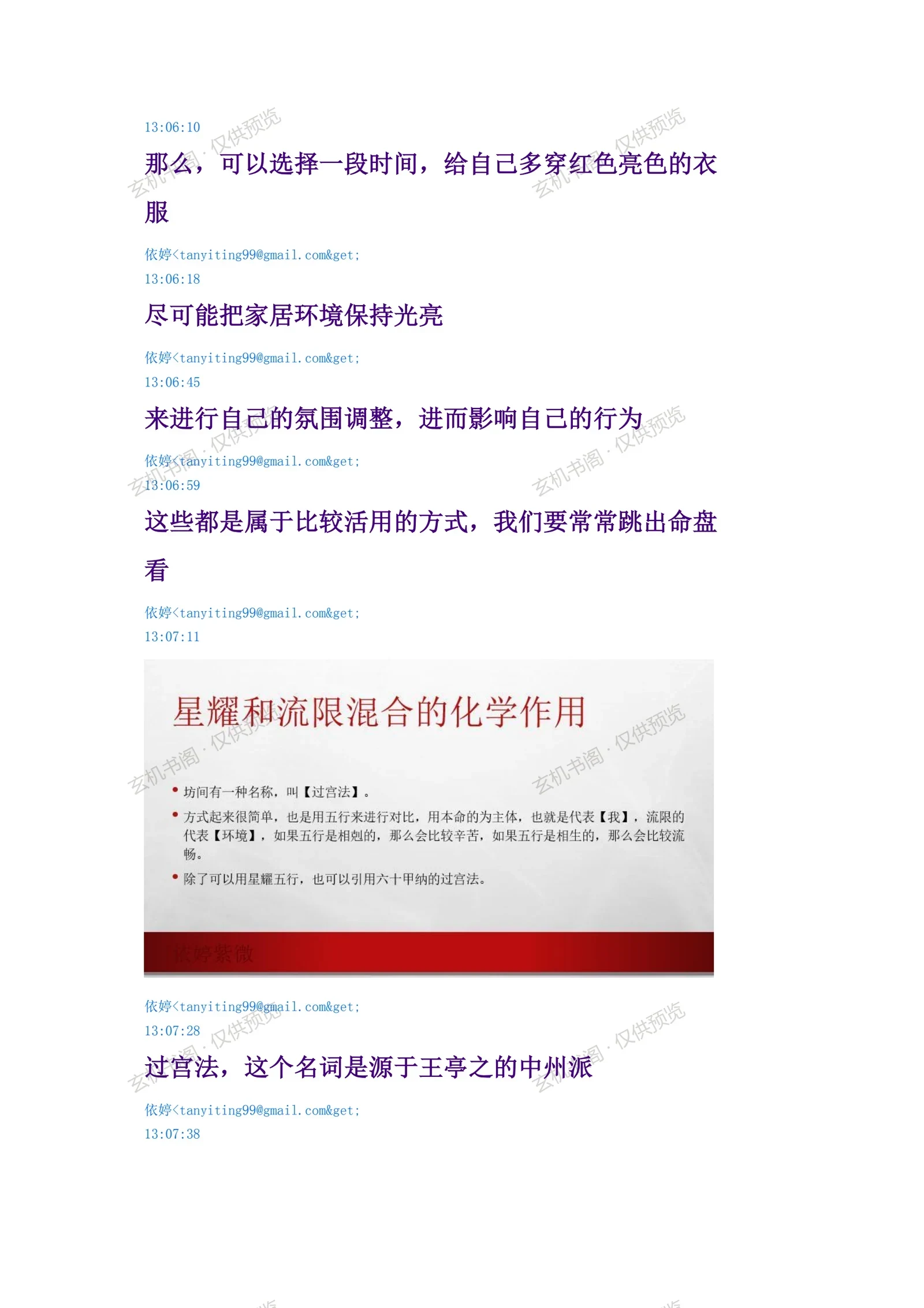
Gong Qi transition method
Star transition method
Interactive chemical effects between stars
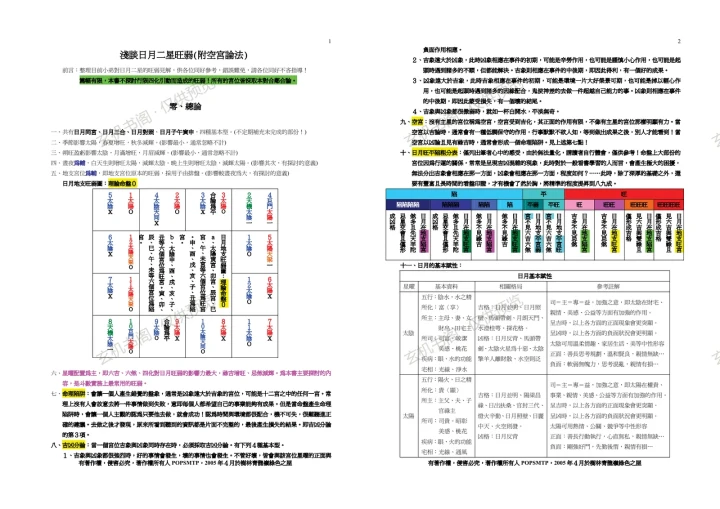
Star analysis: Tianfu, Taiyin, Tanlang, Jumen, Tianxiang, Tianliang, Qisha, Pojun
Key Points
Zi Wei Dou Shu chart reading requires observing chemical effects between stars, not isolated stars.
Judging star fortunes by comparing multiple palaces (e.g., Life Palace with Spouse or Servant Palace).
Auspicious and malefic stars combined yield very different judgments, affecting career and family.
Dimness reduces star power; malefic stars with dimness lead to weakness and giving up.
The transition method compares natal and transient charts via Five Elements, from Wang Tingzhi's Zhongzhou school.